Návraty k výkladu pojmu "národ". Odpovědi na umlčování občanského jazyka a jazyka "vlasti" jako společného domova
Klíčová slova:
Roma, critical discourse analysis, dialogue, affect, social exclusion, anti-Romani racismAbstrakt
The article focuses on the connection between language use and the loss of voice in contexts of social exclusion and/or poverty. The discursive event at the centre of this text is an audio recording of a meeting held between long-term residents of the neighbourhood Bedřiška and their municipal district mayor Liana Janáčková. In July 2007, it became a topic of public discussion as the recording revealed the stance of the then senator and her explicitly racist utterances. I understand this past event as embedded in a dialogic-affective time-space and examine it from a critical sociolinguistic and interdisciplinary perspective to shed light on its meaning today. My analysis is based on an interview published in the news magazine Týden on 6 August 2007 and an editorial written by the Romani journalist Jarmila Balážová in the news magazine Romano voďi on 21 August 2007. My analysis shows that the release of the recording not only forced the senator to account for her words, but more importantly enabled her to imagine the Czech public as non-Romani. I also argue that Balážová's experience of this discursive conflict can be read as an expression of the loss of her civic language and home, her reaction interweaving a language of insecurity and distrust with critical response.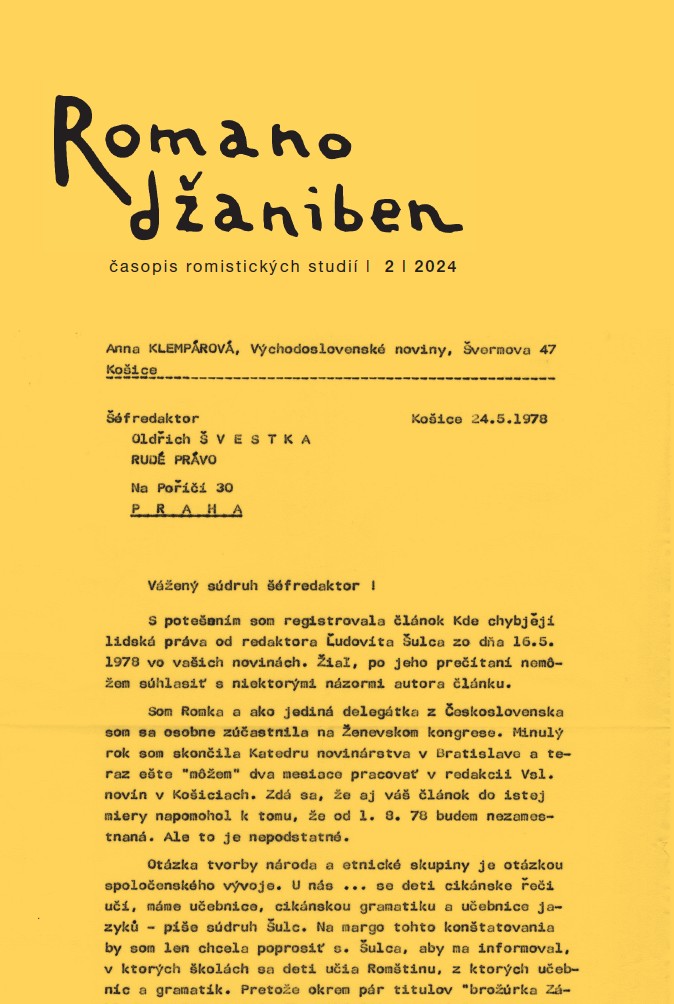
Stažení
Publikováno
2024-12-27
Číslo
Sekce
RECENZOVANÁ ČÁST