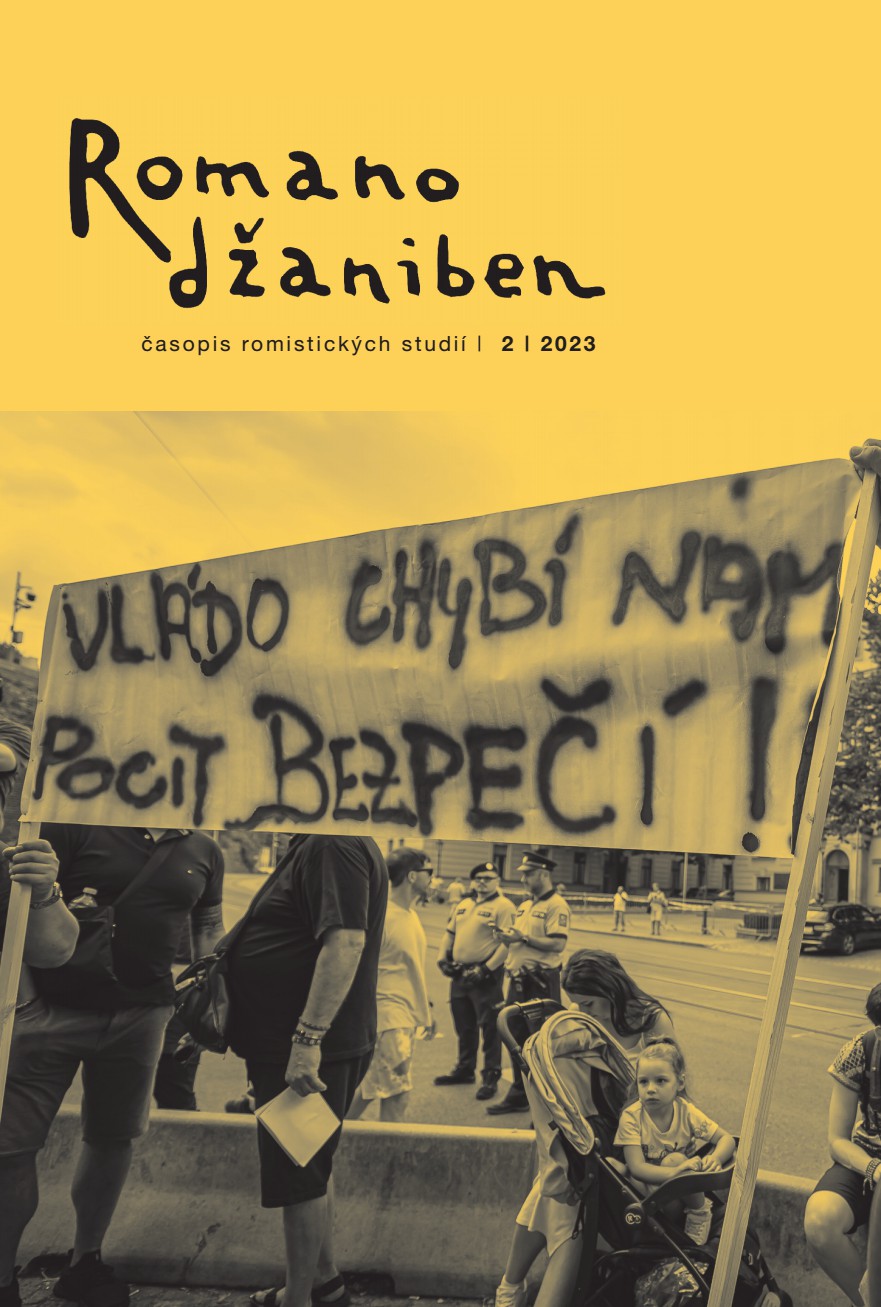
Sekuritizace zespodu. Jak politiky nulové tolerance utvářely český sociální systém
Keywords:
securitisation, RomovéAbstract
Securitization is usually understood as the result of discursive practices in which
certain groups (or phenomena) are identified as an existential threat to a state,
society or a particular community. In European countries, such practices target,
among others, the Roma, and are not limited to the security forces, but enter other
areas of public policy, culture or media. This article focuses on local anti-Roma
policies of so-called zero tolerance in North Bohemia and their impact on national
level. It examines a specific situation where local actors use social policies as a part
of securitization practices. Social policies are no longer seen as an instrument of
social protection, but become an instrument of control over undesirable populations,
especially poor Roma. The article shows how the methods and internal logic of these
municipal “zero tolerance” policies shaped the Czech social system and the general
discourse on Roma and social protection in the Czech Republic over the last two
decades.